We launch probes toward distant planets and build particle colliders in search of things that expand our understanding of the universe. Meanwhile, some of the most extraordinary living science on Earth is concentrated on a cluster of volcanic islands in eastern Indonesia.
Komodo National Park is home to the Komodo dragon, the largest living lizard, capable of reaching roughly three metres in length. Around these prehistoric-looking predators lies an equally remarkable marine environment: coral reefs, manta rays, volcanic landscapes, and beaches whose unusual colours are produced by natural geological and biological processes.
For anyone with a scientific eye on the world, Komodo feels less like a conventional sightseeing destination and more like a field laboratory you are allowed to walk, hike, and snorkel through.
How you experience it depends on what fascinates you most: the dragons, the marine ecosystem, the geology, or simply the scale of the landscape.
A few things matter before you go. Komodo dragons are wild predators, so visits to dragon habitat are conducted with park guides or rangers and their instructions should be followed closely. Boat quality and safety standards vary, making operator choice important. And because access rules, park fees, and visitor-management policies can change, confirm the current requirements before locking in your itinerary.
Here are the best ways to experience Komodo National Park.
1. Compare and Book It All in One Place
Komodo trips range from fast day tours to private charters, traditional Phinisi liveaboards, snorkeling expeditions, and dedicated diving trips. Most start in Labuan Bajo on Flores, but inclusions vary significantly between operators.
Komodo Island Tours brings those options together by format, length, and itinerary, making it easier to compare what you are actually getting rather than choosing purely on price.
That matters here because two tours with similar headlines may operate very differently. One may include park transfers and several snorkeling stops, while another adds charges locally. Some day trips attempt to fit Padar, a dragon trek, Pink Beach, and manta snorkeling into one long itinerary; slower liveaboards distribute the same locations across several days.
You can compare Komodo tours here before arriving in Labuan Bajo.
Best for travelers who want to understand the different tour formats before choosing an operator.
2. Meet the Dragons: Komodo and Rinca
This is the encounter that made the park famous.
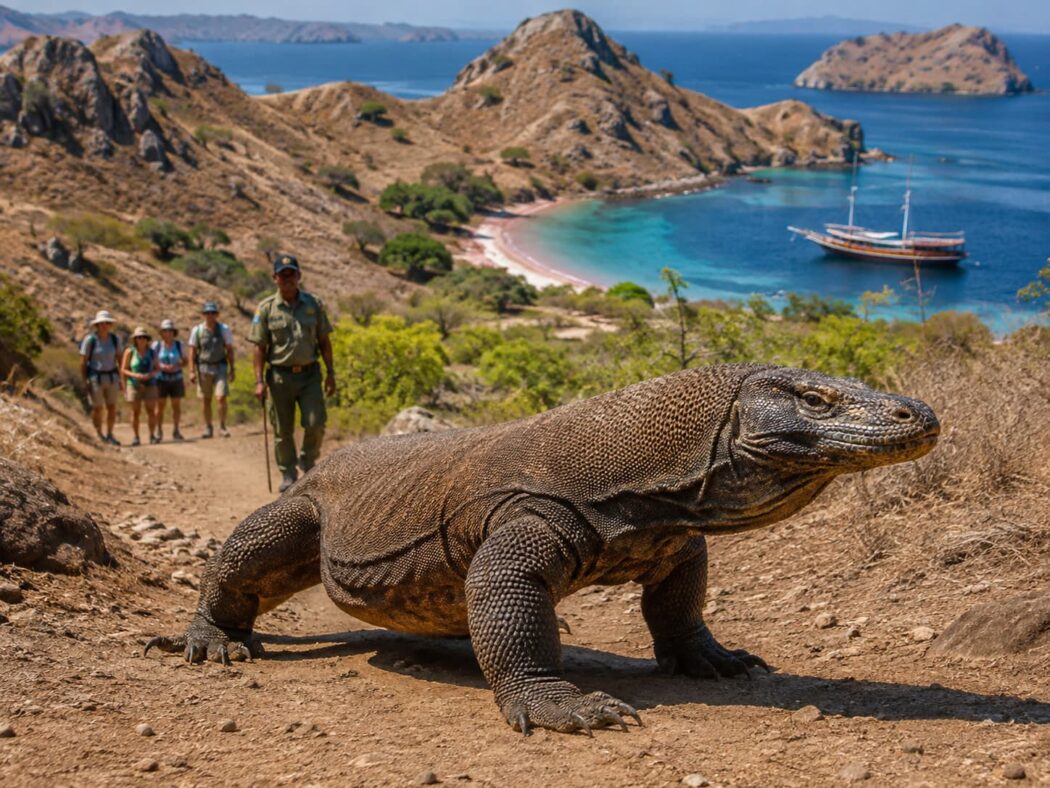
Komodo dragons exist naturally only in this part of Indonesia, including populations on Komodo, Rinca, and several surrounding islands. They are enormous monitor lizards and effective apex predators, equipped with powerful jaws, serrated teeth, and venom-associated adaptations that help subdue prey.
Seeing one at close range is very different from seeing one in a documentary. Their movement can look slow until it suddenly isn’t, which is one reason visitors should remain with their guide and avoid treating the animals as photo props.
Komodo Island is the best-known location, while Rinca is another major dragon-viewing area and can fit more naturally into some routes from Labuan Bajo.
Their biology is just as interesting as their appearance. Female Komodo dragons are capable of parthenogenesis, meaning they can occasionally produce offspring without fertilization by a male. It is one of several unusual reproductive adaptations documented in the species.
Morning visits are often preferable because temperatures are lower and hiking is more comfortable.
Best for wildlife enthusiasts and anyone interested in evolution and animal behaviour.
3. Climb Padar Island for the Iconic View
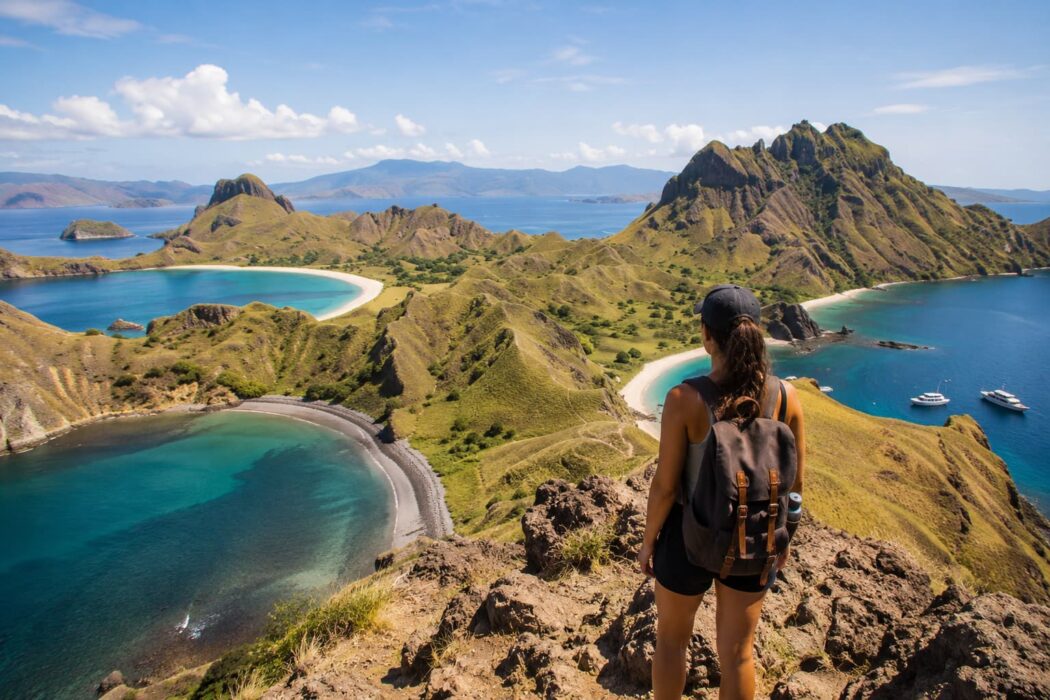
Padar delivers the image that has become almost synonymous with Komodo.
A steep staircase and trail climb from the landing point to viewpoints overlooking a remarkable arrangement of curved bays, rugged volcanic ridges, and contrasting beaches. The landscape is an especially clear illustration of the park’s volcanic origins: erosion has carved narrow ridgelines between deeply indented coastlines, creating a view that looks almost deliberately composed.
Sunrise is the classic time to go. The light is softer, temperatures are lower, and the surrounding hills take on warmer colours before the daytime heat sets in.
The climb itself is not technical, but it is exposed and can feel strenuous in hot weather. Carry water, use strong sun protection, and wear shoes with decent grip.
Best for photographers, hikers, and anyone who wants the park’s defining panorama.
4. Snorkel With Mantas and Explore the Reefs
Komodo is as important below the waterline as it is above it.
Strong currents moving between the Indian Ocean and surrounding Indonesian seas help create a nutrient-rich marine environment supporting coral reefs, fish, sharks, turtles, and manta rays.
Manta Point is one of the best-known snorkeling locations. Mantas regularly move through the area to feed or visit cleaning stations, sometimes passing remarkably close to snorkelers.
The experience can be extraordinary, but it is worth remembering that these are wild animals. There is no guarantee they will be present, and visitors should avoid touching, chasing, or blocking them.
Currents around Komodo can also be powerful. Conditions suitable for an experienced diver may not be appropriate for a weak swimmer, so follow the crew’s instructions about where and when to enter the water.
Beyond the mantas, dedicated diving itineraries reveal why Komodo is considered one of Southeast Asia’s major marine destinations, with coral walls, drift dives, reef sharks, turtles, and enormous schools of fish.
Best for snorkelers, divers, and anyone interested in marine ecosystems.
5. Pink Beach, Taka Makassar and the Smaller Islands
Komodo’s smaller stops are more than filler between the dragons and Padar.
Pink Beach is famous for its reddish-pink sand, created when pale sand mixes with red material derived partly from reef organisms and coral fragments. The exact shade varies with moisture, light, and location, so it may appear soft rose rather than the highly saturated pink seen in edited photographs.
Taka Makassar is almost the opposite landscape: a tiny pale sandbar surrounded by brilliant shallow water. It is commonly included on boat itineraries and works beautifully as a swimming or snorkeling stop when conditions are calm.
Other sheltered bays around the park can produce turtle sightings and quieter reef snorkeling.
These places are often rushed on high-speed day tours. A multi-day boat gives you much more flexibility to enjoy them when the larger day-trip groups have moved on.
Best for swimmers, casual snorkelers, and travelers who want time to appreciate the park beyond its headline attractions.
Day Trip or Liveaboard?
This is the biggest practical decision.
A speedboat day trip from Labuan Bajo can cover a remarkable amount of ground. Typical routes combine Padar, a dragon-viewing stop, Pink Beach, and one or more snorkeling locations. It is efficient and works well if your schedule is limited.
The downside is the pace. You spend a significant portion of the day moving between locations, and each stop is necessarily timed.
A two- or three-night liveaboard changes the experience completely. Traditional Indonesian Phinisi-style boats remain inside or near the park overnight, allowing earlier starts, sunset anchorages, slower snorkeling sessions, and far less pressure to race back to Labuan Bajo.
Accommodation ranges from very basic shared cabins to private en-suite rooms on high-end vessels, so check the actual boat rather than assuming that the word “liveaboard” implies a particular comfort level.
Best overall for most first-time visitors with enough time: a three-day, two-night itinerary.
A Few Practical Things Before You Go
Most visitors reach Komodo by flying to Labuan Bajo on western Flores and continuing into the national park by boat.
The relatively dry period from roughly April through November is popular because hiking conditions are generally better and seas are often more manageable, although marine conditions vary by month and individual day. Manta rays can be encountered throughout much of the year, so avoid choosing a trip based on a promise that one particular month guarantees sightings.
Park fees and access policies have changed repeatedly in recent years. Check exactly what your operator includes before paying, especially national-park entry charges, ranger or guide fees, snorkeling equipment, transfers, and meals.
Do not approach dragons independently, feed wildlife, or treat mantas and turtles as interactive attractions. The value of Komodo is that these animals are still living in functioning wild ecosystems.
For background before the trip, UNESCO’s Komodo National Park page explains the site’s World Heritage significance, while Wonderful Indonesia is useful for broader travel planning.
Choosing the Right Experience
Komodo rewards travelers who decide what they most want to understand.
Start by comparing the formats through Komodo Island Tours. If the dragons are the priority, make sure your route includes a properly guided visit to Komodo or Rinca. If landscapes draw you, prioritize Padar at sunrise. If marine biology interests you most, build the day around manta and reef snorkeling or choose a dedicated dive itinerary. If you want the complete experience without rushing, spend several days aboard a liveaboard.
However you structure it, bring curiosity rather than a checklist. Few destinations allow you to watch giant reptiles in the morning, climb across volcanic terrain before lunch, and spend the afternoon drifting above coral reefs with manta rays.
It is evolution, geology, and marine ecology concentrated into one remarkably small corner of the planet.
Author note: Recommendations here are based on established Komodo National Park experiences and tour formats. Park fees, visitor-management rules, weather, and marine conditions can change, so confirm current details with official sources and your operator before departure.
Last modified: 2026-08-26